


Why Seawater Flotation Requires Specialized Reagents
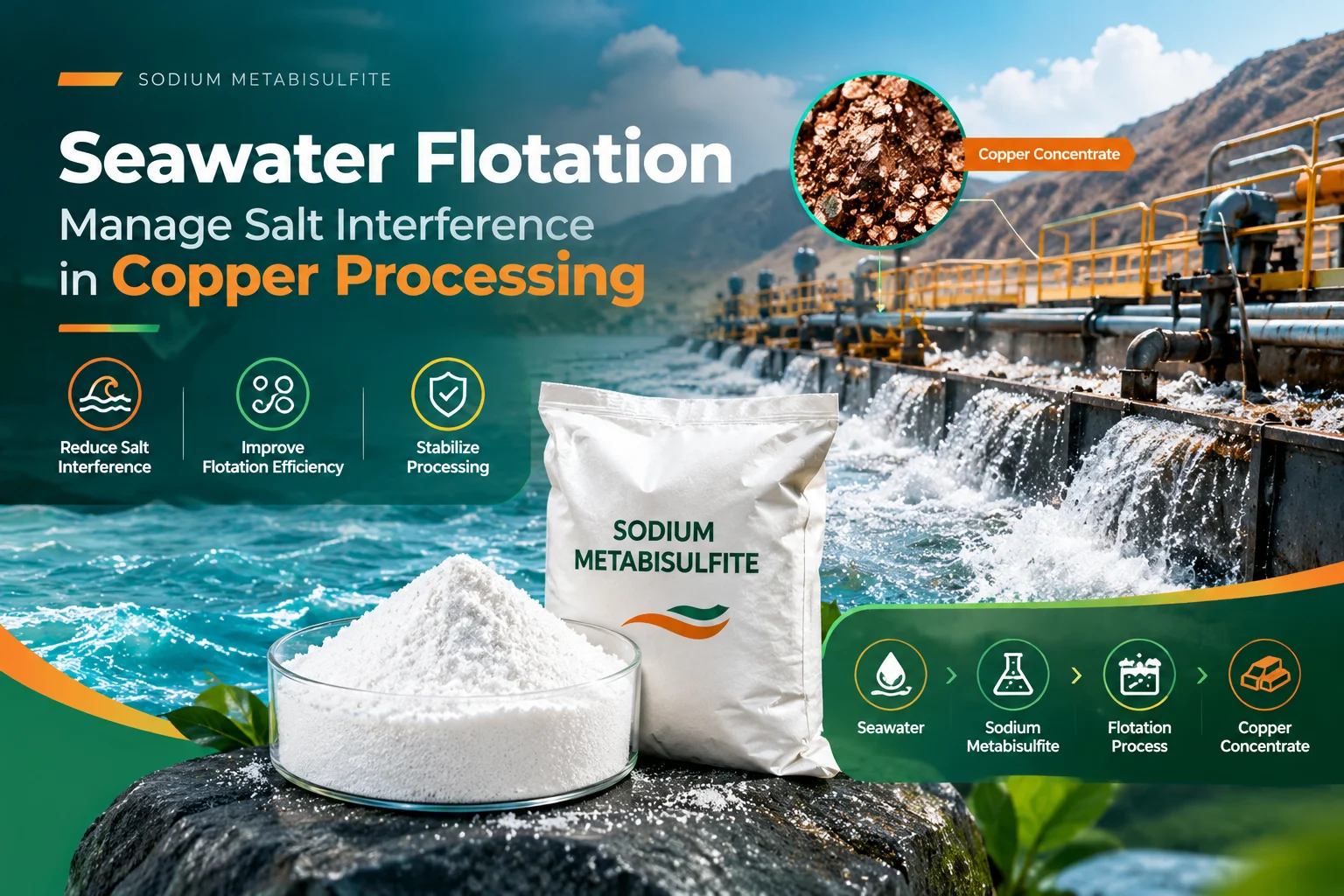
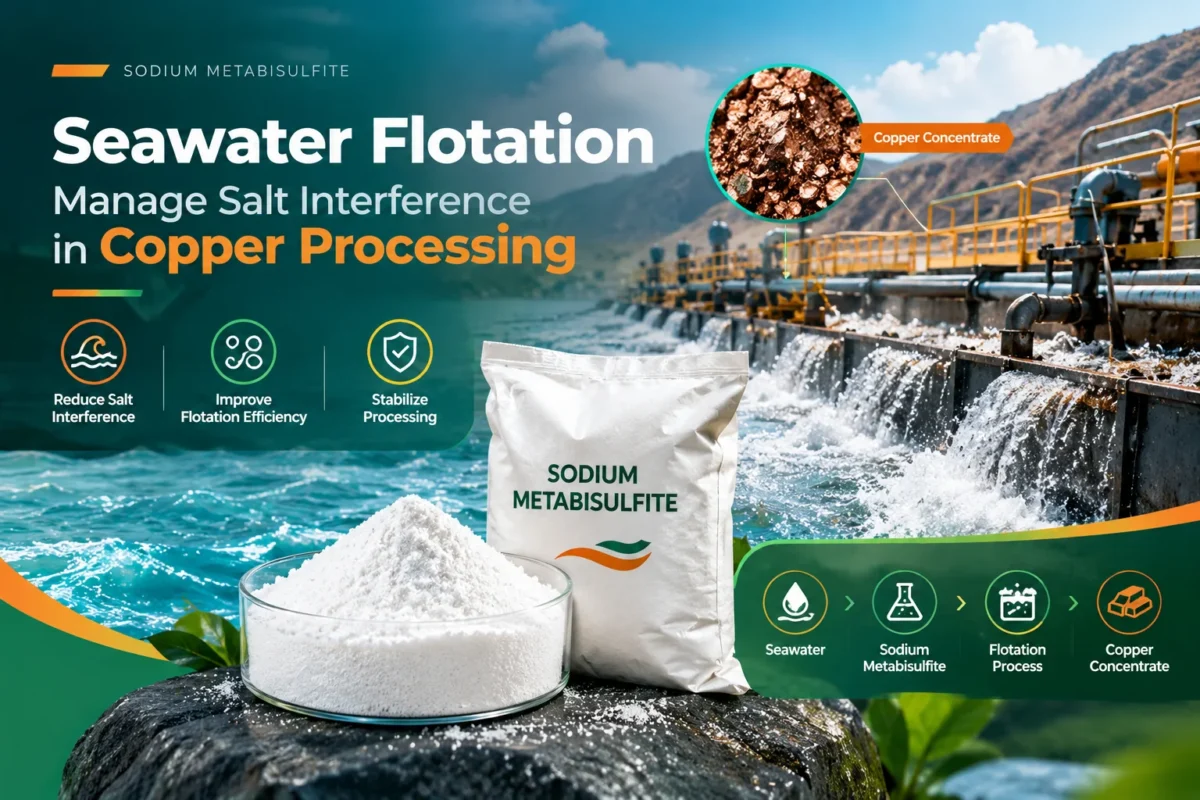
Seawater flotation offers a practical way to reduce freshwater consumption in mineral processing, particularly for coastal mining operations and regions with limited water resources. However, dissolved salts introduce additional challenges when processing copper sulfide ores.
Calcium and magnesium ions can react under alkaline flotation conditions, forming precipitates that interfere with mineral surfaces and flotation selectivity. These effects can reduce the recovery of certain valuable minerals and complicate concentrate separation.
Sodium metabisulfite (SMBS, Na₂S₂O₅) is used in selected flotation circuits as a reducing agent and mineral depressant. When combined with other reagents, it can help control mineral selectivity under specific seawater conditions. Its effectiveness depends on ore mineralogy, pulp pH, reagent dosage, and the target separation.
1. How Salt Interference Affects Copper Flotation
Seawater contains dissolved salts, including calcium and magnesium compounds. Under strongly alkaline conditions, magnesium hydroxide can precipitate:
Mg²⁺ + 2OH⁻ ⇌ Mg(OH)₂↓
These precipitates may interact with mineral surfaces and affect collector adsorption, particle dispersion, and flotation behavior. Calcium-containing precipitates can also influence mineral surface chemistry.
The main operational challenges include:
- Mineral surface interference: Precipitates may alter surface properties and affect collector adsorption.
- Reduced flotation selectivity: Interactions among dissolved ions, collectors, and depressants can change which minerals float.
- Process instability: Changes in pH, seawater composition, and reagent dosage can affect flotation performance.
- Additional reagent requirements: Operators may need to adjust the reagent scheme to maintain the desired separation.
Managing these effects requires a flotation strategy tailored to the ore and water chemistry rather than relying on a single reagent.
2. What Role Does Sodium Metabisulfite Play in Seawater Flotation?
Sodium metabisulfite dissolves in water and forms sulfite and bisulfite species. Depending on the operating conditions, it can influence pulp redox conditions and mineral surface reactions.
Its principal functions in flotation include:
Redox control: SMBS acts as a reducing agent and can modify the oxidation-reduction environment of the pulp.
Mineral depression: In selected sulfide flotation circuits, SMBS can suppress the floatability of particular minerals, helping improve separation selectivity.
Interaction with dissolved ions: Sulfite species can react with calcium and magnesium under suitable conditions. These reactions may affect mineral surfaces and flotation behavior, but they do not guarantee that all interfering ions remain dissolved.
Research has demonstrated that SMBS can act as a pyrite depressant under certain flotation conditions. Other studies show that it can selectively depress copper minerals during copper-molybdenum separation in seawater. These findings highlight the importance of matching the reagent strategy to the target mineral and separation objective.
3. Why Combine SMBS with Other Flotation Reagents?
In some seawater copper flotation processes, operators combine SMBS with other reagents to improve flotation performance rather than using it alone. For example, a patented copper sulfide flotation method combines sodium metabisulfite with sodium sulfide, sodium silicate (water glass), and sodium humate. Together, these reagents aim to manage seawater-related interference and improve flotation selectivity under specific operating conditions.
The components may serve complementary functions:
| Reagent | Potential Function |
|---|---|
| Sodium metabisulfite | Redox modification and mineral depression |
| Sodium silicate | Gangue dispersion and surface conditioning |
| Sodium humate | Organic surface conditioning and interactions with dissolved ions |
| Sodium sulfide | Sulfide-related surface modification and reducing reactions |
The actual contribution of each component depends on the ore, pH, dosage, and reagent sequence. The combination should therefore be validated through laboratory flotation tests before industrial implementation.
How Should SMBS Dosage Be Determined?
There is no universal SMBS percentage or dosage suitable for every seawater flotation circuit.
A practical optimization process should consider:
- Water chemistry: Measure salinity, pH, and relevant calcium and magnesium concentrations.
- Ore mineralogy: Identify the target copper minerals, associated sulfides, and gangue minerals.
- Dosage testing: Evaluate different SMBS concentrations and combinations with other reagents.
- Performance measurement: Compare mineral recovery, concentrate grade, and separation selectivity.
- Plant validation: Confirm the selected conditions under representative operating conditions.
This approach helps avoid excessive reagent consumption and unintended depression of valuable minerals.
4. Where Is Seawater Flotation Relevant?
Seawater flotation is particularly relevant to coastal mining operations where freshwater availability is limited or freshwater use competes with other needs.
For copper and copper-molybdenum processing, the main considerations include:
- Availability and consistency of seawater supplies
- Ore mineralogy and required concentrate specifications
- Calcium and magnesium precipitation at the operating pH
- Compatibility of collectors, depressants, and pH regulators
- Water recycling, tailings management, and environmental requirements
Coastal operations in Indonesia and other mining regions may benefit from evaluating seawater-based processing. However, suitability must be established through site-specific metallurgical testing rather than geography alone.
Frequently Asked Questions
What is sodium metabisulfite used for in seawater flotation?
SMBS is used as a reducing agent and mineral depressant in selected flotation circuits. Its effects depend on the target mineral, pulp chemistry, and operating conditions.
Can sodium metabisulfite eliminate calcium and magnesium interference?
Not by itself in every system. Sulfite species can interact with dissolved ions, but these reactions may also produce precipitates. Water chemistry and mineral surface effects must be evaluated together.
What is the recommended SMBS dosage for copper flotation?
The appropriate dosage depends on ore composition, water chemistry, pH, and the desired separation. Laboratory flotation tests should establish the dosage before plant-scale use.
Conclusion: Optimize Seawater Flotation with the Right Reagent Strategy
Seawater flotation can help reduce freshwater demand, but calcium and magnesium interactions create challenges for mineral separation. Sodium metabisulfite in seawater flotation can support redox control and selective mineral depression when applied under suitable conditions.
For reliable results, combine appropriate reagent selection with water chemistry analysis, dosage optimization, and metallurgical testing. A well-designed reagent strategy can help processing plants balance mineral recovery, concentrate quality, and operating costs.
Source High-Purity Sodium Metabisulfite from SXS
SXS supplies sodium metabisulfite for industrial applications. Contact our team to request product specifications, discuss bulk supply requirements, and evaluate material suitability for your mineral processing operation.