

Food processing manufacturers, seafood exporters, and chemical distributors across the Association of Southeast Asian Nations (ASEAN) are undergoing a significant transition toward higher raw material purity standards. Driven by expanding domestic urbanization, growing packaged food exports, and stricter regional food safety enforcement, food factories in Indonesia, Vietnam, Thailand, and the Philippines are upgrading their additive specifications. Consequently, B2B procurement managers frequently ask chemical manufacturers a central technical question: “As Southeast Asian food processing plants upgrade raw material standards to meet updated food safety certifications, which specific chemical parameters and heavy metal testing thresholds are being tightened?”
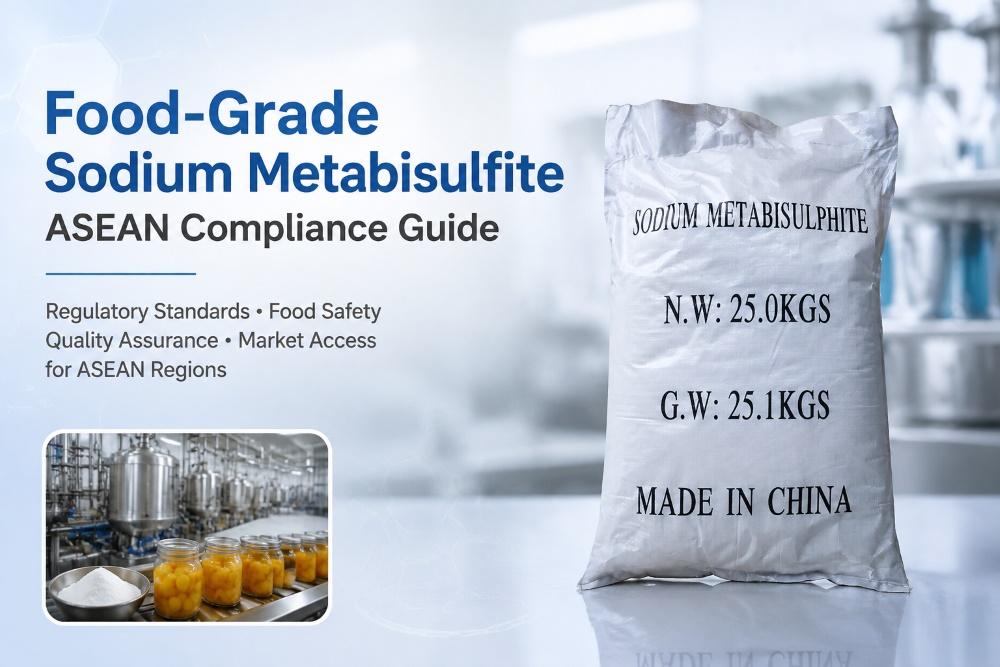
Using sub-standard or industrial-grade preservatives in food application risk batch contamination, regulatory rejection at customs, and expensive export recalls. Selecting high-purity food-grade sodium metabisulfite chemical guide examines regional market dynamics, ASEAN compliance parameters, heavy metal limits, and procurement best practices for B2B exporters and processors.
1. Growing Demand for Food-Grade Sodium Metabisulfite in Southeast Asia
Southeast Asia is experiencing increasing demand for high-purity chemical additives driven by expanding food processing, beverage manufacturing, and water treatment industries.
Compared with traditional industrial applications, food-grade sodium metabisulfite is gaining greater attention among ASEAN manufacturers because of stricter export requirements and higher raw material quality standards.
Food processors across Vietnam, Thailand, Indonesia, and the Philippines are upgrading additive sourcing strategies to meet international food safety expectations.
Key Market Applications of Food-Grade Sodium Metabisulfite
| Application Area | Main Function | Typical Industrial Use |
|---|---|---|
| Food Processing | Antioxidant, preservative, and anti-browning agent | Dried fruit, tapioca starch, seafood, and beverage processing |
| Water Treatment | Chlorine neutralization | RO feed water protection in food and beverage factories |
| Export Manufacturing | Quality compliance improvement | Meeting international customer and regulatory requirements |
Food Processing Applications
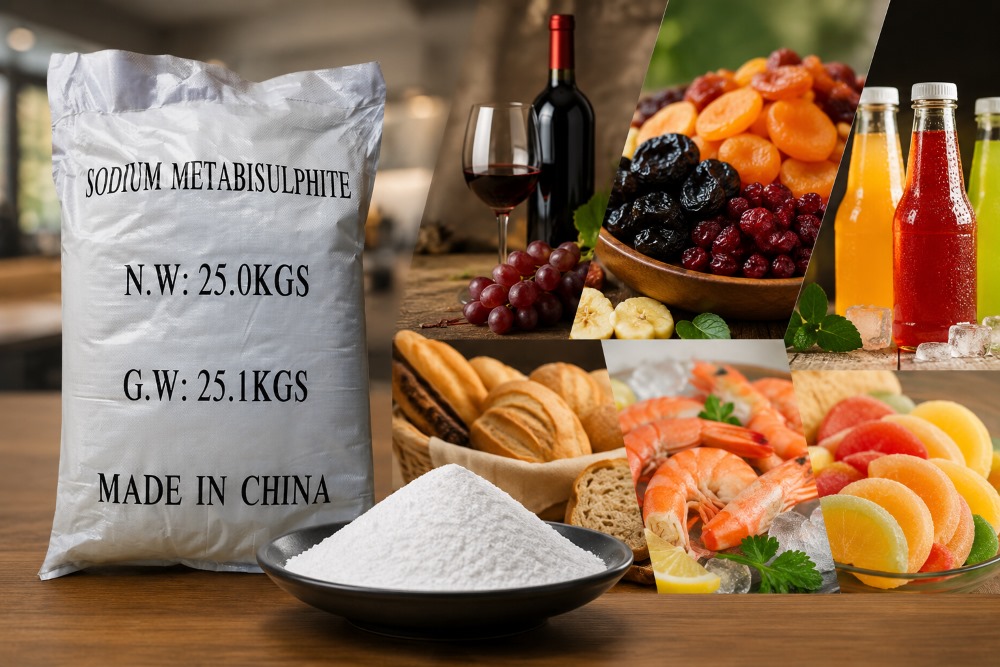
Food manufacturers use sodium metabisulfite as a functional additive for controlling oxidation and maintaining product quality.
Common applications include:
- Preventing enzymatic browning in dried fruits.
- Supporting tapioca starch processing.
- Controlling melanosis in shrimp and seafood products.
- Maintaining product appearance during storage.
Food-Grade RO Water Treatment Applications
Many food and beverage plants use reverse osmosis (RO) systems to produce high-purity process water.
Food-grade sodium metabisulfite helps remove residual chlorine before RO filtration. This protects sensitive membrane materials from oxidative damage while maintaining process water quality.
2. ASEAN Regulatory Requirements for Food-Grade Sodium Metabisulfite
Exporting sodium metabisulfite into ASEAN markets requires compliance with both regional food additive standards and individual country regulations.
Manufacturers and importers typically evaluate chemical purity, heavy metal limits, documentation, and product traceability.
Key Chemical Specifications
Food processors generally verify the following quality parameters before approving suppliers:
| Quality Parameter | Typical Requirement |
|---|---|
| Sodium Metabisulfite Assay (Na₂S₂O₅) | ≥97.0% |
| Available Sulfur Dioxide (SO₂) | ≥65.0% |
| pH Value (10% Solution) | 4.0–4.8 |
| Iron Content (Fe) | ≤10–15 ppm |
| Water Insoluble Matter | ≤0.05% |
Heavy Metal Control Requirements
Heavy metal testing represents one of the most important quality checks for food additive applications.
| Testing Item | Recommended Limit |
|---|---|
| Arsenic (As) | ≤2 ppm |
| Lead (Pb) | ≤2 ppm |
| Total Heavy Metals | ≤10 ppm |
| Selenium (Se) | ≤5 ppm |
| Iron (Fe) | ≤15 ppm |
Reliable suppliers should provide batch-specific Certificate of Analysis (COA) reports supported by laboratory testing.
ASEAN Country-Specific Compliance Considerations
Although ASEAN countries continue improving regulatory alignment, each market maintains different registration and labeling requirements.
Indonesia Food Additive Requirements
Imported food additives may require BPOM registration and additional halal documentation depending on the application and market requirements.
Vietnam Food Additive Regulations
Vietnam follows food additive management requirements aligned with international standards. Products typically require proper labeling and functional classification information.
Thailand Food Additive Control
Thailand regulates sodium metabisulfite usage levels and requires declaration of additive functions and permitted applications.
Philippines Import Requirements
Food additive suppliers may need appropriate FDA registration documents and product verification procedures before commercial distribution.
3. Food-Grade vs Industrial-Grade Sodium Metabisulfite
Industrial-grade sodium metabisulfite cannot always replace food-grade material because purity levels and impurity controls differ significantly.
| Specification | Industrial Grade | Food Grade |
|---|---|---|
| Na₂S₂O₅ Purity | Approximately 96–97% | ≥97% controlled purity |
| Arsenic Level | Higher impurity variation | Controlled below food safety limits |
| Lead Content | Less strict control | Strict heavy metal limitation |
| Iron Content | Higher possibility of discoloration | Low iron level for food clarity |
| Certifications | Industrial quality systems | Food safety certifications |
| Applications | Mining, wastewater, pulp industry | Food processing and beverage applications |
Food-grade sodium metabisulfite requires tighter control of trace contaminants because these impurities directly affect food safety, appearance, and regulatory acceptance.
4. Procurement Checklist for ASEAN Buyers
Food processors, distributors, and chemical importers should evaluate suppliers based on several critical factors.
Verify Batch-Level Heavy Metal Testing
Choose suppliers that provide ICP-MS testing results for:
- Arsenic (As)
- Lead (Pb)
- Mercury (Hg)
- Cadmium (Cd)
Batch-specific testing improves supply chain transparency and reduces compliance risks.
Confirm Food Safety Certifications
Qualified suppliers should maintain internationally recognized quality systems, including:
- HACCP
- ISO 22000
- FSSC 22000
- Halal certification is required
These certifications support approval processes for multinational food manufacturers.
Check ASEAN Halal Compatibility
For Muslim-majority ASEAN markets, buyers should confirm halal documentation from recognized certification organizations.
This helps simplify customs clearance and market access.
Select Moisture-Protected Packaging
Sodium metabisulfite can degrade when exposed to moisture and oxygen.
For Southeast Asian climates, suppliers should use protective packaging solutions such as:
- PE inner liners
- 25kg moisture-resistant bags
- 1000kg bulk bags
Proper packaging helps maintain sulfur dioxide content during storage and transportation.
Technical Summary
Sourcing food-grade sodium metabisulfite for ASEAN markets requires careful evaluation of purity levels, heavy metal limits, certifications, and country-specific regulations.
As food processors continue improving raw material standards for export production, reliable chemical suppliers play an important role in ensuring consistent quality and regulatory acceptance.
SXS manufactures high-purity sodium metabisulfite for food processing, water treatment, and industrial applications. With controlled production processes, quality documentation, and international compliance support, SXS helps global customers build stable chemical supply chains.