


Food scientists, commercial product developers, and bulk chemical procurement officers face constant pressure to maximize food safety while preserving the natural sensory traits of raw agricultural goods. During industrial processing, fresh ingredients rapidly encounter ambient oxygen, bacteria, and heat. Consequently, these environmental stressors trigger enzyme-driven browning, texture decay, and off-flavor defects that quickly ruin product merchantability.
To combat this organic spoilage, food manufacturers utilize specialized preservative agents to extend shelf life reliably. Specifically, sourcing premium sodium metabisulfite provides an all-in-one chemical defense system that stabilizes colors, halts microbial growth, and protects nutritional profiles simultaneously. This technical engineering guide breaks down the three functional roles of this inorganic salt and clarifies its structural differences compared to sodium bisulfite.
1. The Three-in-One Chemical Defense Mechanism
Unlike basic single-function additives, this versatile compound alters the chemical environment of food matrices through three interconnected biochemical pathways:
  Sodium Metabisulfite (Na₂S₂O₅) ──> Releases Active Sulfur Dioxide (SO₂)
                                             │
       ┌──────────────────┼─────────────────┐
       ▼                                    ▼                                  ▼
 [Antioxidant Action]              [Antimicrobial Action]             [Bleaching Action]
 Inhibits polyphenol oxidase       Disrupts cell membranes            Reduces organic pigments
 Blocks enzymatic browning         Halts bacterial replication        Keeps fruit flesh bright
 The Antioxidant Engine (Enzymatic Browning Control)
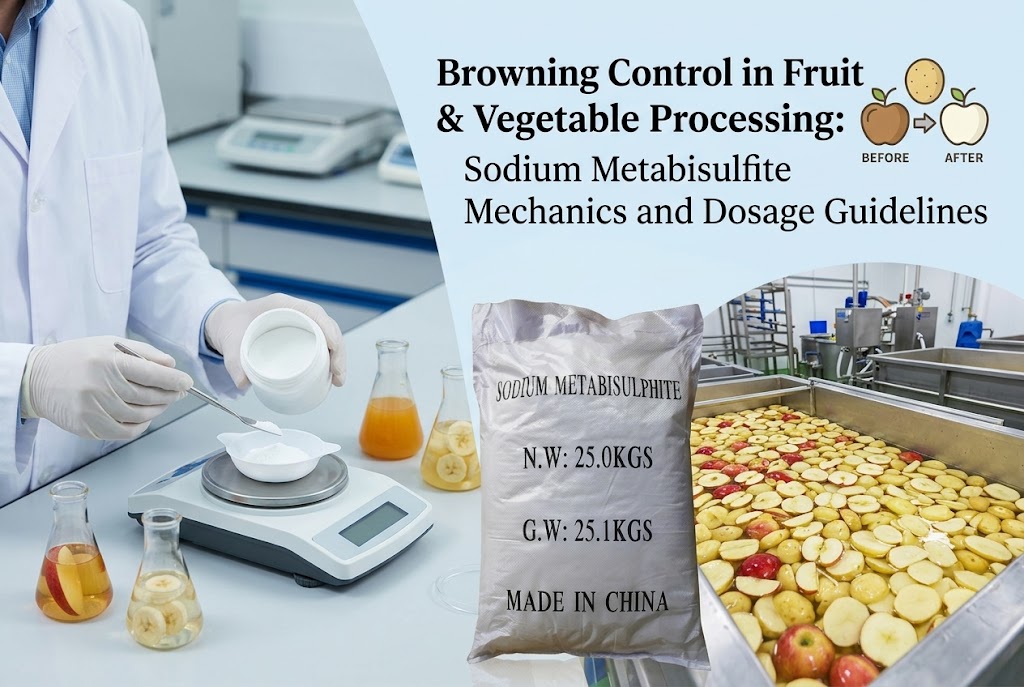
When raw vegetables are cut or bruised, internal polyphenol oxidase (PPO) enzymes interact with air to form dark brown polymers. However, introducing the additive alters this process immediately. The compound releases active sulfur dioxide (SO2) gas, which binds to the active copper sites of PPO enzymes, rendering them completely inactive. This powerful reaction blocks both enzymatic and non-enzymatic browning, preserving the natural color of the food.
The Antimicrobial Barrier
The free sulfurous acid generated by the additive passes easily through the cellular walls of contaminating yeasts, molds, and wild bacteria. Once inside the cytoplasm, it reacts with vital cell proteins and breaks down essential enzyme systems. This disruption stops cellular breathing and replication instantly, keeping food safe from spoilage even in warm storage environments.
The Bleaching and Color-Stabilizing Effect
In addition to blocking enzymes, the dissolved sulfite ions act as a powerful reducing agent. They react with colored organic pigments, turning yellow and brown compounds into colorless structures. This reaction keeps processed starches, sugars, and plant fibers consistently bright and appealing over long shelf-life windows.
2. Sodium Metabisulfite vs. Sodium Bisulfite: Structural and Operational Differences
Procurement teams often confuse these two inorganic salts because of their similar names and overlapping regulatory classifications. However, looking at their chemical structures reveals distinct physical differences.
Chemical Hydrolysis Relationship:
Dry Form: Sodium Metabisulfite (Na₂S₂O₅) ── Solid Powder Profile
Dissolved In Water: Splits Into Two Sodium Bisulfite Molecules
Na₂S₂O₅ + H₂O ◄───► 2 NaHSO₃
From a pure chemical standpoint, sodium metabisulfite (Na2S2O5) represents a dry, highly stable anhydrous crystalline powder. Conversely, pure sodium bisulfite (NaHSO3) exists primarily as an unstable liquid solution that degrades quickly when exposed to open air.
When you dissolve solid metabisulfite powder into clean process water, it undergoes instant hydrolysis. The single Na2S2O5 molecule absorbs water and splits into two active molecules of sodium bisulfite (NaHSO3). Because of this identical behavior in liquid mixtures, international food safety agencies group both compounds under the same “Sulfur Dioxide and Sulfites” regulatory bracket. Wholesalers prefer buying the solid metabisulfite format because its dry form offers a longer shelf life, lower shipping costs, and easier storage stability.
3. Commercial Applications and Global Sourcing Thresholds
To ensure regulatory compliance across international borders, food production plants must strictly follow maximum usage limits (calculated as total residual SO2 gas):
-
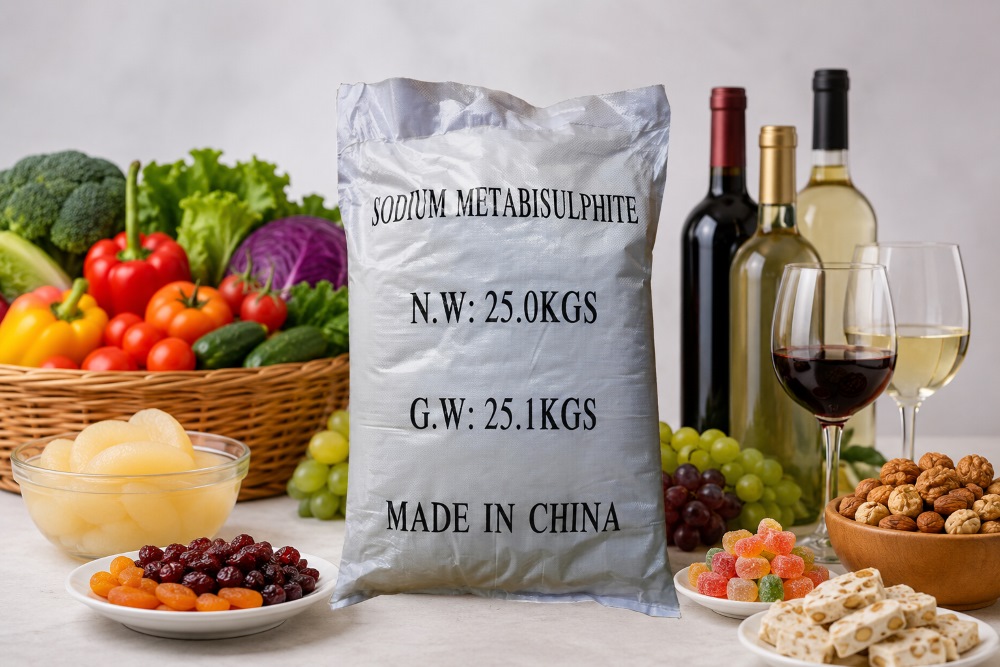
Color Protection for Fruits and Vegetables: Adding a 0.05% concentration of the salt to canned yams completely stops surface discoloration. This chemical approach provides far better color stability over long storage times than standard treatments using sodium D-isoascorbate.
-
Commercial Wine Preservation: Winemakers rely on the additive as the core active ingredient in traditional Campden tablets. It eliminates wild field yeasts before fermentation begins and shields the finished vintage against oxidation during aging.
-
Bulk Coconut Cream Bleaching: Processing facilities mix the compound into raw coconut milk blends to act as a powerful whitening agent, ensuring the liquid retains a clean, bright appearance.
-
Confectionery and Baked Goods: Biscuit factories add the chemical to large dough mixtures at a maximum limit of 0.1g/kg to soften the gluten matrix, which yields a uniform, crispy cracker texture.
Conclusion: Secure Your Food Production Line Stability
In conclusion, maintaining long-term commercial success in the competitive food export market requires sourcing high-purity preservatives that protect ingredient quality reliably.
Stop risking your product batches and manufacturing reputation on unverified, low-grade chemical stocks that suffer from inconsistent grain sizes and poor solubility. Upgrading your raw material procurement orders to our premium sodium metabisulfite platforms guarantees absolute chemical purity, rapid dissolution, and predictable SO2 gas release. We refine every batch under strict industrial quality controls to ensure your ingredients pass strict international food safety audits cleanly.
Contact our enterprise logistics group today to review our technical data sheets and secure your next wholesale cargo shipment.