



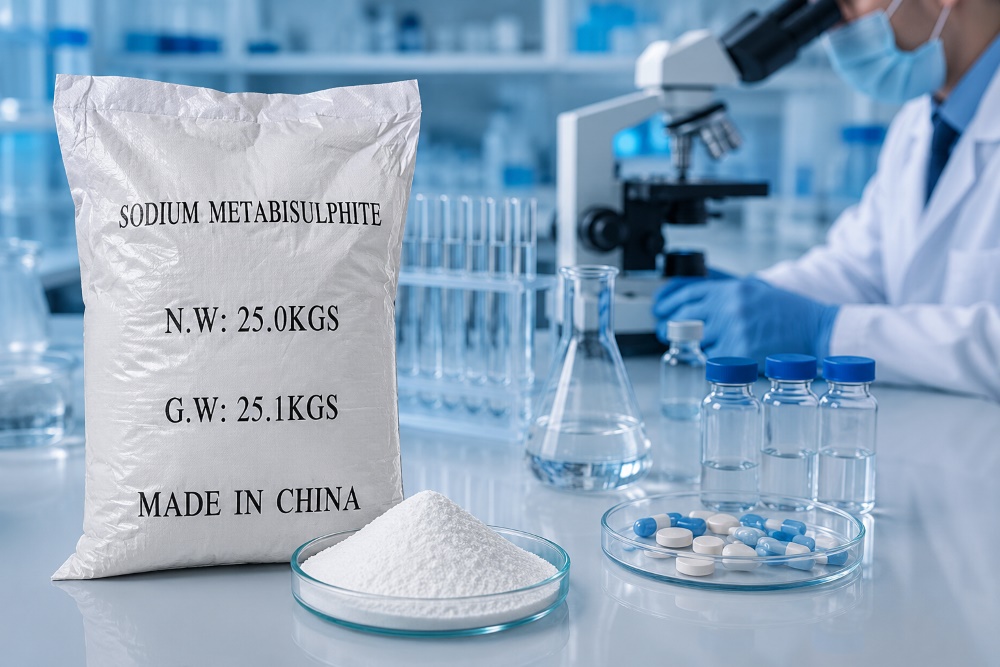
Pharmaceutical formulators, drug developers, and medical research procurement specialists widely recognize sodium metabisulfite (also known as sodium pyrosulfite) as a reliable antioxidant for protecting sensitive active pharmaceutical ingredients (APIs) from oxidative degradation. However, ongoing biochemical research continuously reveals expanded functionality for this versatile inorganic compound beyond traditional stabilization roles. Consequently, research procurement teams frequently approach specialty chemical suppliers with forward-looking inquiries, asking: “Beyond its established use as a protective antioxidant in liquid injections and oral formulations, what emerging pharmaceutical research applications and therapeutic mechanisms exist for high-purity sodium pyrosulfite?”
Relying on traditional applications without exploring new therapeutic uses limits innovation in drug formulation and antimicrobial design. Recent scientific developments demonstrate that sodium pyrosulfite serves as an effective sulfur dioxide (SO2) donor, opening up new possibilities for controlling fungal pathogens and formulating novel topical disinfectants. This comprehensive scientific guide examines the newly discovered antifungal mechanisms of sodium pyrosulfite, breaks down its intracellular reactive oxygen species (ROS) pathways, and offers strategic sourcing insights for pharmaceutical procurement teams.
1. The Emerging Antifungal Frontier: Sodium Pyrosulfite as a Sulfur Dioxide Donor
While pharmaceutical chemists historically leveraged sodium pyrosulfite to prevent oxidation in aqueous solutions, groundbreaking research highlights its powerful action against resistant fungal pathogens.
Key Research Findings on Fungal Pathogen Control
A pivotal study published in Postharvest Biology and Technology (2022) revealed a novel biochemical pathway through which sodium pyrosulfite inhibits plant and opportunistic fungal pathogens, such as Botrytis cinerea. Researchers demonstrated that sodium pyrosulfite acts effectively as a controlled sulfur dioxide (SO₂) donor upon micro-dissolution. Rather than acting merely as a surface preservative, the compound actively disrupts the internal antioxidant defense networks and crucial sulfur metabolism pathways of fungal cells.
Expanding Opportunities in Pharmaceutical Research
These insights open new horizons for pharmaceutical research applications, particularly in the development of topical antifungal treatments, medical equipment disinfectants, and specialized therapeutic formulations targeting recalcitrant fungal infections.
2. Intracellular ROS Accumulation: Step-by-Step Biochemical Mechanism
Understanding how sodium pyrosulfite disrupts fungal pathogens requires a closer look at its multi-stage physiological impact on cellular metabolism.
| Stage | Biochemical Mechanism | Physiological Effect |
|---|---|---|
| 1. Sulfur Dioxide Release | Sodium pyrosulfite releases sulfur dioxide (SO₂) when exposed to moisture. | Active SO₂ interacts with fungal cells and begins the antifungal process. |
| 2. Antioxidant Gene Suppression | SO₂ interferes with fungal antioxidant defense pathways and gene expression. | The fungus loses its ability to neutralize oxidative stress. |
| 3. Reactive Oxygen Species Accumulation | Intracellular reactive oxygen species (ROS) rapidly accumulate. | Oxidative stress damages proteins, lipids, and other cellular components. |
| 4. Cell Membrane Damage | Continuous oxidative damage disrupts membrane integrity and cellular metabolism. | Fungal cells lose viability and eventually die. |
Step 1: Controlled SO2 Release and Cell Wall Penetration
When applied in aqueous environments, sodium pyrosulfite releases controlled amounts of active sulfur dioxide species. These molecules readily penetrate the protective cell walls of targeted fungi.
Step 2: Suppression of Fungal Antioxidant Gene Expression
Once inside the fungal cell, the active sulfur species suppresses key antioxidant genes. This enzymatic downregulation prevents the fungal organism from synthesizing protective enzymes such as superoxide dismutase (SOD) and catalase (CAT).
Step 3: Accumulation of Intracellular Reactive Oxygen Species (ROS)
Because the fungal cell’s antioxidant defense system is compromised, toxic Reactive Oxygen Species (ROS) accumulate rapidly within the cytoplasm.
Step 4: Metabolic Collapse and Cellular Apoptosis
This unchecked ROS surge triggers severe lipid peroxidation in the cell membrane, alters internal pH balances, and degrades metabolic proteins. Consequently, fungal cell viability declines rapidly, achieving complete Botrytis cinerea inhibition and halting pathogen spread.
Antifungal Efficacy & Mechanism Comparison Matrix
The table below contrasts the dual functional roles of pharmaceutical-grade sodium pyrosulfite across traditional formulation and emerging therapeutic settings:
| Evaluation Dimension | Traditional Antioxidant Application | Emerging Antifungal Research Application |
| Primary Functional Role | Oxygen scavenger & API stabilizer | Active SO2 donor & antimicrobial agent |
| Target Organism / Substrate | Oxygen-sensitive drug molecules | Pathogenic fungi (e.g., Botrytis cinerea) |
| Biochemical Pathway | Prevents oxidative degradation of APIs | Induces intracellular ROS accumulation |
| Enzymatic Impact | Protects active chemical structures | Suppresses fungal antioxidant gene expression |
| Potential End-Product | Injectable solutions, syrups, tablets | Topical antifungals, specialized disinfectants |
3. Strategic Procurement Guidelines for Pharmaceutical Formulators
To capitalize on these novel therapeutic insights, research teams and procurement specialists should implement three foundational sourcing practices:
-
Specify Ultra-High Purity and Assay Consistency: Developing therapeutic-grade antimicrobial or antifungal formulations requires raw materials with consistent chemical assays (typically $\ge$98.0% purity) and strictly controlled heavy metal impurity limits.
-
Verify Controlled Particle Size for Uniform Dissolution: Choose finely milled powder grades that dissolve predictably in aqueous vehicles. Consistent dissolution rates ensure precise $SO_2$ release profiles during chemical synthesis or topical formulation.
-
Monitor Regulatory Trends in Medical Disinfectants: Keep abreast of evolving international pharmacopeial standards (such as USP, EP, and JP) regarding sodium metabisulfite limits, ensuring that new antifungal and disinfectant formulations comply fully with global regulatory frameworks.
Conclusion: Leverage Advanced Biochemical Capabilities for Next-Generation Formulations
In conclusion, understanding the novel sodium pyrosulfite antifungal mechanism enables pharmaceutical developers to expand their innovation pipeline beyond traditional antioxidant uses into cutting-edge antimicrobial therapies.
Rather than viewing this established compound solely as a static preservative, drug research teams can harness its active SO2-donating and ROS-inducing properties to create next-generation antifungal agents, medical-grade disinfectants, and specialized topical treatments. Sourcing high-purity, fully certified active ingredients guarantees precise reaction kinetics, uncompromised safety, and superior batch-to-batch consistency. Our technical support team works closely with research institutions and pharmaceutical manufacturers to provide comprehensive documentation, custom particle sizing, and reliable bulk supply.